
Dog Grooming Tips for Shedding Season
If you own a dog that sheds, you know how quickly loose hair can take over your home.
Hair can collect on furniture, floors, carpets, clothing, bedding, and practically every other surface. During periods of heavier shedding, keeping your dog and home clean can become even more challenging.
The good news is that proper grooming can make shedding much easier to manage.
Regular brushing, appropriate bathing, professional de-shedding, and a consistent grooming schedule can help remove loose hair before it ends up throughout your home.
For dog owners in Nampa, Idaho, understanding how your dog’s coat behaves during shedding season can make it easier to maintain a clean, healthy-looking coat throughout the year.
Why Do Dogs Shed?
Shedding is a normal part of the hair-growth cycle for many dogs.
Old or damaged hairs eventually fall out and are replaced by new growth.
The amount a dog sheds varies significantly.
Some dogs shed relatively little. Others shed constantly or experience noticeable periods of heavier shedding.
Breed, coat type, genetics, environment, age, and individual health can all affect shedding.
Dogs with double coats often have a dense undercoat beneath a protective outer coat. These dogs may experience periods of particularly heavy shedding.
What Is Seasonal Shedding?
Seasonal shedding occurs when some dogs naturally lose larger amounts of undercoat during certain times of the year.
The exact timing can vary based on the dog and environment.
Dogs living indoors may experience shedding throughout the year because artificial lighting and indoor temperatures can influence normal seasonal patterns.
However, many owners still notice periods when their dog’s shedding becomes significantly heavier.
This is when regular brushing and professional de-shedding can be particularly helpful.
Brush Your Dog Regularly
One of the most effective ways to manage shedding is regular brushing.
Brushing removes loose hair before it falls onto your furniture and floors.
The correct brush depends on your dog’s coat.
A short-haired dog may need a different brush than a dog with a long, thick, or double coat.
The goal is not simply to brush as aggressively as possible.
Brushing should be comfortable and appropriate for the dog’s coat.
If your dog has a thick coat, brushing only the surface may not remove loose hair from deeper layers.
Don’t Wait Until the Coat Is Tangled
Shedding and matting can occur at the same time.
Loose hair can become trapped in the coat and contribute to tangles.
This is particularly important for long-haired and curly-coated dogs.
Regular brushing helps prevent loose hair from accumulating and becoming part of a larger mat.
If you notice mats developing, professional grooming may be appropriate.
Bathe Your Dog When Appropriate
Bathing can help remove dirt, loose hair, and debris from the coat.
A professional bath typically includes washing, rinsing, drying, and brushing.
The exact products and bathing schedule should be appropriate for your dog’s coat and skin.
Bathing too frequently with unsuitable products can potentially irritate the skin.
If you are unsure how often your dog should be bathed, ask your professional groomer or veterinarian for guidance.
Consider Professional De-Shedding
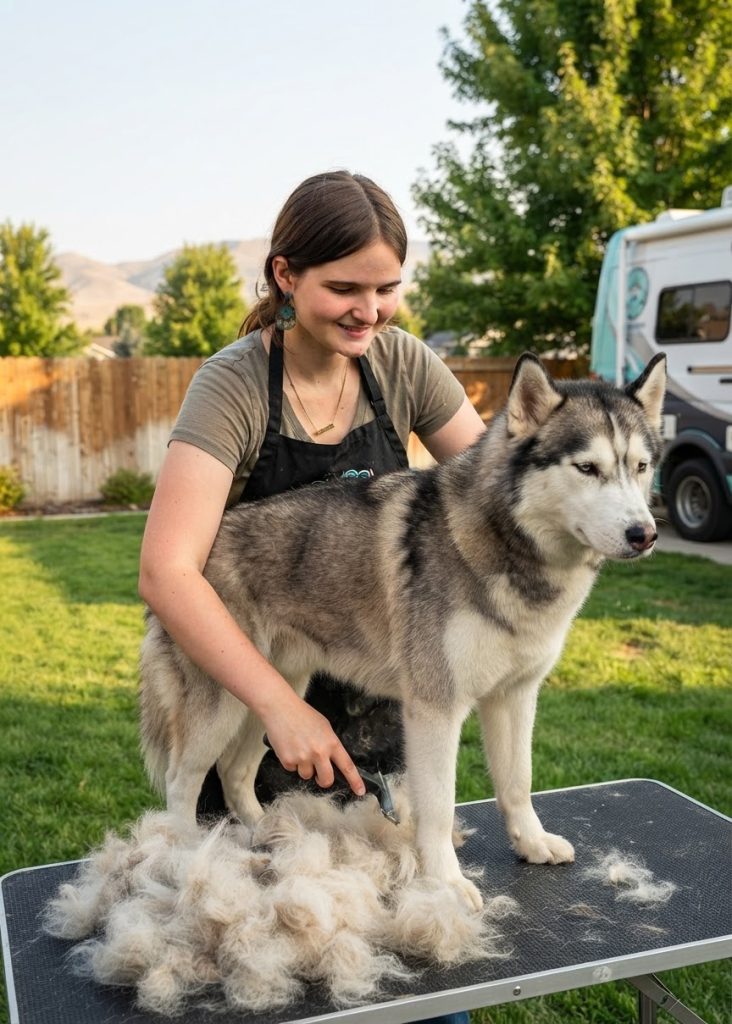
Professional de-shedding can be particularly useful for dogs that produce large amounts of loose hair.
A professional grooming appointment can combine bathing, drying, brushing, and specialized coat-care techniques designed to remove loose undercoat.
This can help reduce the amount of loose hair remaining in the coat.
Professional de-shedding is not simply about making the dog look better.
It can make routine coat maintenance easier between appointments.
Which Dogs May Benefit From De-Shedding?
Dogs with thick or double coats are often strong candidates for professional de-shedding.
Examples can include breeds such as:
Golden Retrievers
Labrador Retrievers
German Shepherd Dogs
Huskies
Australian Shepherds
Border Collies
Many mixed-breed dogs with dense coats
Every dog is different, so the appropriate grooming method depends on the individual coat.
Don’t Shave a Double-Coated Dog Just Because It Sheds
One common misconception is that shaving a shedding dog will solve the shedding problem.
Shaving is not automatically the best solution.
Double-coated breeds have specialized coats that provide insulation and protection.
Removing the coat very short may not accomplish what an owner expects and can interfere with the coat’s natural function.
Instead of assuming shaving is the answer, discuss your dog’s coat with a professional groomer.
Appropriate brushing and de-shedding may be a better approach.
Use the Right Grooming Tools
There are many brushes and grooming tools available.
However, the right tool depends on the coat.
Common grooming tools include:
Bristle brushes
Slicker brushes
Undercoat rakes
Grooming combs
De-shedding tools
Pin brushes
Not every tool is appropriate for every dog.
Using the wrong tool incorrectly can irritate the skin or damage the coat.
A professional groomer can help you understand what type of brush is best for your dog’s coat.
Brush in a Calm Environment
Grooming sessions should be as comfortable as possible.
Choose a location where your dog can stand safely and where you can work without rushing.
Use gentle movements and avoid pulling aggressively on tangles.
If your dog becomes uncomfortable or resistant, forcing the process can make future grooming more difficult.
Short, positive grooming sessions can help your dog become accustomed to regular brushing.
Check Common Problem Areas
When brushing your dog, pay special attention to areas where tangles commonly develop.
These include:
Behind the ears
Around the collar
Under the legs
Around the tail
Behind the legs
Under the belly
Between the toes
These areas may become tangled more quickly than other parts of the coat.
Keep the Coat Dry
Moisture can contribute to tangling in some coat types.
After bathing or swimming, make sure your dog’s coat is properly dried.
Dogs with thick coats may take considerable time to dry completely.
Professional groomers have equipment and techniques designed to dry coats efficiently while maintaining comfort.
Maintain Your Dog’s Nails
Shedding season is about coat care, but grooming should not stop with the coat.
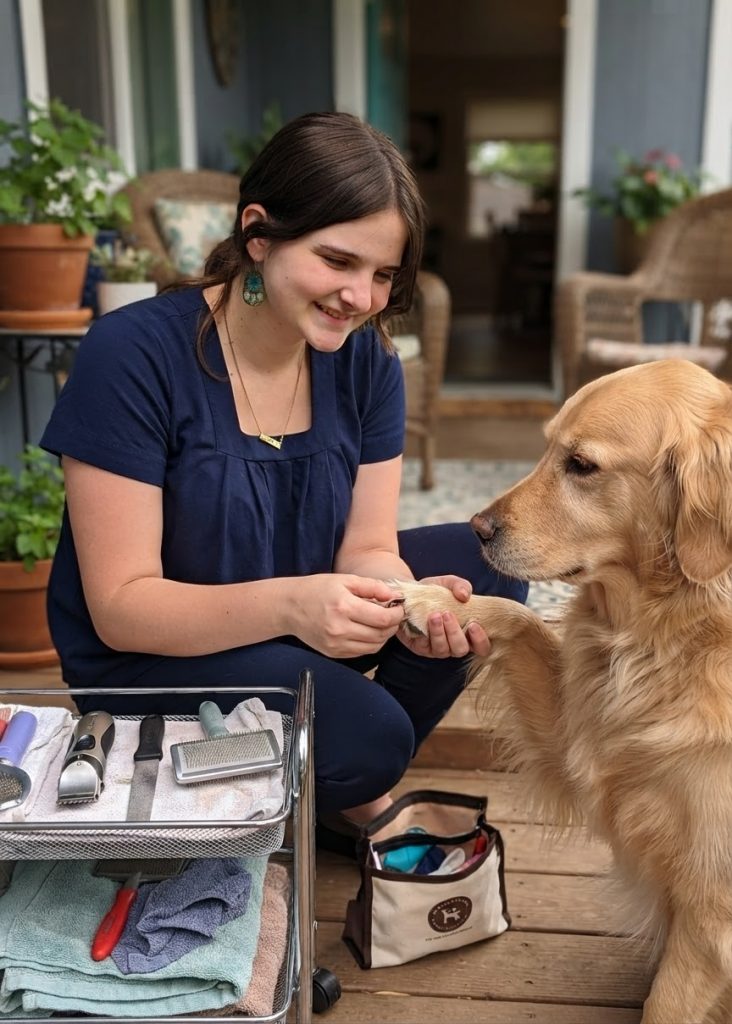
Nail trimming is another important part of routine grooming.
Overgrown nails can affect comfort and movement.
Regular nail maintenance can be incorporated into professional grooming appointments.
Don’t Ignore Skin Changes
When you are brushing your dog more frequently, you have an excellent opportunity to notice changes in the skin.
Pay attention to:
Redness
Flaking
Sores
Unusual bumps
Bald patches
Persistent irritation
Unusual odors
A groomer can notice changes while working with your dog’s coat, but a groomer should not diagnose medical conditions.
If you see something concerning, contact your veterinarian.
Diet and Shedding
A dog’s coat condition can be influenced by overall health and nutrition.
If your dog’s coat suddenly becomes dull, brittle, excessively dry, or unusually thin, discuss the change with your veterinarian.
A healthy coat starts with appropriate nutrition and overall health.
Grooming alone cannot solve every coat problem.
Clean Your Grooming Tools
Brushes and grooming tools should be kept clean.
Hair, dirt, and debris can accumulate on brushes over time.
Cleaning your grooming tools helps keep your dog’s grooming routine more hygienic.
Create a Consistent Grooming Routine
The biggest mistake many owners make is waiting until shedding becomes overwhelming.
Instead, create a routine.
For example, depending on your dog’s coat, you might brush several times each week and schedule professional grooming every four to eight weeks.
Dogs with heavier shedding or more demanding coats may require more frequent attention.
Consistency makes coat maintenance much easier.
How Professional Grooming Helps During Shedding Season
Professional grooming can give your dog’s coat a fresh start.
A typical de-shedding appointment may include:
Coat assessment
Bathing
Appropriate shampoo
Thorough rinsing
Professional drying
Brush-out
Loose undercoat removal
Nail trimming
Ear cleaning
Finishing and coat maintenance
The exact services depend on the dog and grooming package.
How Often Should You Schedule De-Shedding?
There is no universal schedule.
Some dogs may benefit from professional de-shedding every four to eight weeks.
Others may need appointments based on seasonal shedding patterns.
Your dog’s breed, coat, lifestyle, and home brushing routine should all be considered.
If you notice that shedding becomes difficult to manage shortly after each appointment, you may benefit from scheduling grooming more consistently.
Shedding Season in Nampa, Idaho
Dogs in Nampa and throughout the Treasure Valley can experience changes in shedding throughout the year.
Outdoor activity, seasonal changes, temperature, and the individual dog’s coat can all affect grooming needs.
Keeping your dog on a consistent grooming schedule can help you stay ahead of heavy shedding rather than waiting until loose hair becomes excessive.
Professional Dog Grooming in Nampa, Idaho
If shedding has become a constant battle, professional grooming may help.
At Dog Groomer Nampa, we provide professional bath, brush, de-shedding, coat-care, nail-trimming, and grooming services designed around each dog’s individual needs.
Whether you have a heavy-shedding breed, a thick double coat, or a dog that simply needs regular maintenance, we can help you establish a grooming routine that keeps the coat clean and manageable.
We proudly serve dog owners throughout Nampa, Idaho, and the surrounding Treasure Valley.
If you are searching for dog grooming Nampa, dog de-shedding Nampa, dog groomer Nampa ID, or pet grooming near me, contact us to schedule your dog’s next grooming appointment.
With consistent brushing and professional grooming, shedding season can become much easier to manage—for both you and your dog.