
How Often Should You Groom Your Dog in Nampa, Idaho?
Regular dog grooming is an important part of keeping your pet clean, comfortable, and healthy. But how often should you actually groom your dog? The answer depends on several factors, including your dog’s breed, coat type, hair length, lifestyle, age, and individual grooming needs.
For dog owners in Nampa, Idaho, seasonal changes can also affect how frequently your dog needs professional grooming. Dogs may need different types of coat care during periods of heavy shedding, while dogs that spend considerable time outdoors may require more frequent bathing, brushing, nail care, and coat maintenance.
There is no single grooming schedule that works perfectly for every dog. Some dogs benefit from professional grooming every four to six weeks, while others may need appointments every six to eight weeks. Dogs with long, curly, thick, or continuously growing coats may require even more frequent attention.
The goal is not simply to make your dog look good. Regular grooming helps maintain the coat, reduce tangles and mats, keep nails at an appropriate length, and give you an opportunity to identify changes in your dog’s skin, coat, ears, paws, or overall appearance.
Why Regular Dog Grooming Matters
Professional dog grooming is about much more than giving your dog a haircut.
A consistent grooming routine helps remove dirt, loose hair, dead skin, and debris from the coat. Brushing can help prevent tangles and mats, while bathing helps keep the skin and coat clean.
Regular grooming also provides an opportunity to maintain areas that can be difficult for dog owners to manage at home, including nails, paws, ears, and sanitary areas.
When grooming becomes part of your dog’s regular routine, it can also become easier to notice changes. A groomer may see unusual lumps, irritated areas, skin abnormalities, excessive matting, or other changes that should be brought to your veterinarian’s attention.
A professional groomer does not replace veterinary care, but regular grooming can be an important part of responsible pet care.
How Often Should a Dog Be Professionally Groomed?
For many dogs, a professional grooming appointment approximately every four to eight weeks is a reasonable starting point.
However, the right schedule depends on your dog’s individual coat and needs.
Dogs With Short Coats
Short-haired dogs generally require less intensive professional grooming than dogs with long or curly coats.
That does not mean they never need grooming.
Short-coated dogs can still benefit from regular baths, brushing, nail trimming, ear cleaning, and other routine care.
Many short-haired dogs may be professionally groomed every six to eight weeks, although some may need appointments more frequently depending on their lifestyle.
Dogs that spend a lot of time outdoors, become dirty frequently, or experience heavy shedding may benefit from additional grooming between routine appointments.
Dogs With Long Coats
Long-haired dogs usually require more frequent grooming because their coats can become tangled and matted more easily.
Depending on the breed and haircut, professional grooming every four to six weeks may help keep the coat manageable.
Regular brushing at home is also extremely important.
A long coat that is not brushed regularly can develop tangles close to the skin. Once mats become severe, grooming becomes more difficult and may require removing significant amounts of coat.
Maintaining the coat before severe matting develops is generally much easier than trying to correct extensive matting later.
Dogs With Curly or Continuously Growing Coats
Some breeds have coats that continue growing rather than shedding in the same way as many short-haired breeds.
These dogs often require a consistent grooming schedule.
Poodles, Doodle mixes, Bichon-type breeds, and similar dogs may need professional grooming approximately every four to six weeks depending on the haircut and how well the coat is maintained at home.
Regular brushing between appointments is essential.
If you prefer your dog’s hair to remain longer, your dog may require more frequent brushing and potentially more frequent grooming appointments.
Puppy Grooming Schedules
Puppies should begin becoming familiar with grooming early.
A puppy’s first grooming experiences can influence how comfortable they are with grooming later in life. Gentle exposure to brushing, bathing, nail trimming, drying, and professional handling can help make future appointments easier.
Puppy grooming does not necessarily mean giving a young puppy a complicated haircut.
Early appointments may focus on getting the puppy comfortable with the grooming process.
Depending on the puppy’s age and vaccination status, your veterinarian or professional groomer can help you determine when it is appropriate to begin professional grooming.
Once your puppy begins regular grooming appointments, maintaining a predictable schedule can help them become accustomed to the experience.
How Often Should You Bathe Your Dog?
Bathing frequency depends on your dog’s coat, skin, lifestyle, and individual needs.
Some dogs need baths more frequently because they spend a lot of time outside or become dirty easily. Other dogs may require less frequent bathing.
Bathing too frequently with inappropriate products can potentially dry or irritate the skin, so it is important to use products designed for dogs and follow professional guidance.
A professional dog groomer can help determine an appropriate bathing routine based on your dog’s coat and grooming needs.
How Often Should You Brush Your Dog?
Brushing frequency is one of the biggest factors determining how well your dog’s coat stays maintained between grooming appointments.
Short-haired dogs may only need brushing a few times per week or as needed.
Long-haired and curly-coated dogs may need brushing much more frequently, sometimes daily.
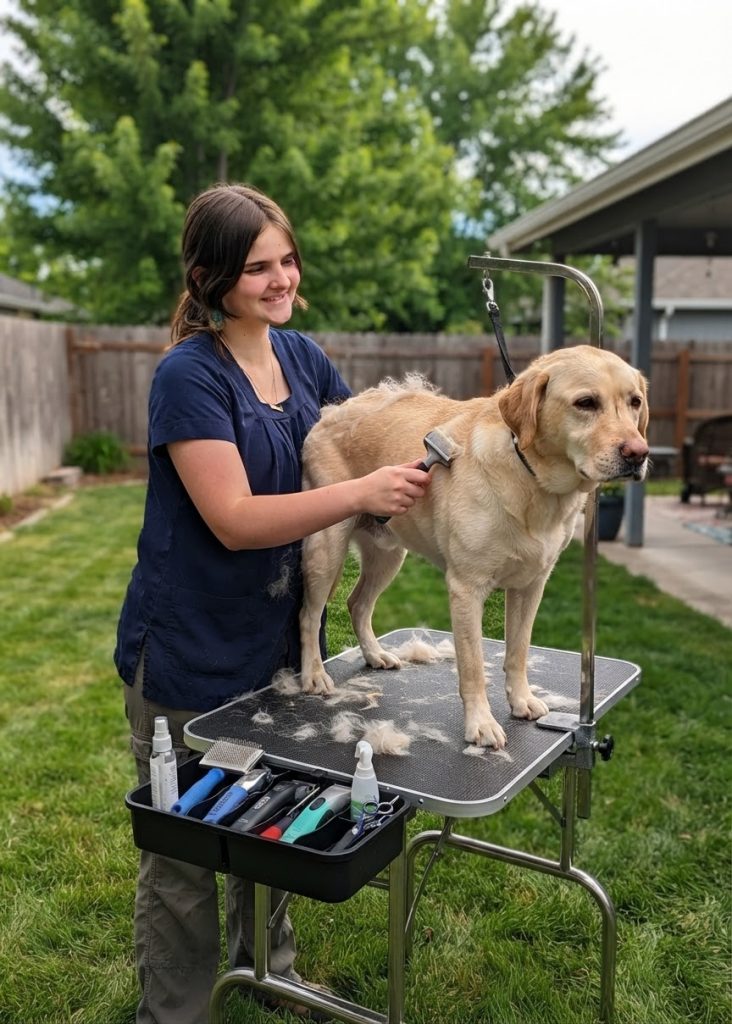
Dogs with thick or double coats can also benefit from regular brushing, particularly during periods of increased shedding.
Brushing helps remove loose hair and can reduce the amount of hair that ends up around your home. It also helps prevent tangles from becoming larger mats.
However, brushing technique matters.
Simply brushing the top layer of hair may not be enough for a thick coat. The coat needs to be maintained thoroughly without causing discomfort to the dog.
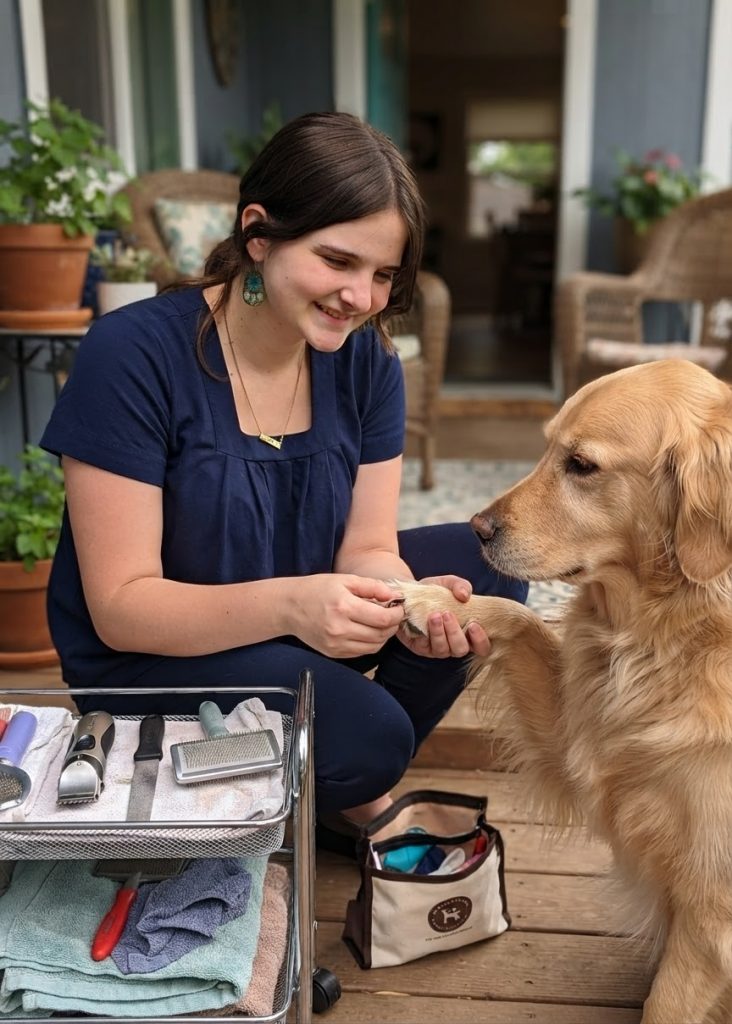
How Often Should You Trim Your Dog’s Nails?
Nail trimming is another important part of routine grooming.
Many dogs need their nails trimmed approximately every three to six weeks, although individual growth rates vary.
If your dog’s nails are clicking loudly against hard floors, visibly curling, or making it difficult for your dog to walk comfortably, they may need attention.
Overgrown nails can interfere with normal movement and may become uncomfortable.
Regular nail maintenance is much easier when it is performed before the nails become significantly overgrown.
How Often Should You Clean Your Dog’s Ears?
Ear care depends heavily on the individual dog.
Some dogs naturally have cleaner ears and require minimal maintenance. Dogs with floppy ears, heavy ear hair, allergies, or a history of ear problems may need more attention.
Professional grooming may include routine ear cleaning when appropriate.
However, if your dog’s ears are red, swollen, painful, unusually dirty, or have a strong odor, veterinary evaluation may be appropriate rather than simply scheduling a grooming appointment.
How Often Do Dogs Need De-Shedding?
Dogs that shed heavily may benefit from professional de-shedding treatments during periods of increased shedding.
The timing varies by breed and individual dog.
Some dogs shed relatively consistently throughout the year, while others experience more noticeable seasonal shedding.
Professional de-shedding can help remove loose undercoat and reduce the amount of loose hair remaining in the coat.
It is particularly useful for dogs with thick or double coats.
De-shedding does not mean removing a dog’s entire undercoat or shaving a double-coated breed. The appropriate grooming approach depends on the breed and coat.
Signs Your Dog Needs Grooming More Frequently
Your dog’s appearance and comfort can tell you a lot about whether the current grooming schedule is working.
You may need to increase grooming frequency if you notice:
Tangled or matted hair
Excessive shedding
A dirty or oily coat
Persistent unpleasant odor
Overgrown nails
Hair covering the eyes
Hair growing excessively around the paws
Debris collecting in the coat
Difficulty brushing the coat
Coat becoming difficult to manage
Sanitary areas becoming difficult to keep clean
If these problems consistently occur before your next appointment, your dog may benefit from a shorter grooming interval.
Your Dog’s Lifestyle Matters
A dog’s lifestyle can significantly affect grooming needs.
An indoor dog with a short coat may remain relatively clean between grooming appointments.
A dog that spends a lot of time hiking, playing outdoors, swimming, or exploring muddy areas may require more frequent bathing and coat care.
Dogs that regularly visit dog parks may also pick up dirt and debris that becomes trapped in their coat.
This is especially important for dogs with longer hair.
Grooming Needs Can Change With the Seasons
Dogs in Nampa and throughout the Treasure Valley may experience changes in grooming needs throughout the year.
During periods of heavy shedding, brushing and de-shedding may become more important.
During warmer weather, owners may also request shorter trims or haircuts, although the appropriate haircut depends on the breed and coat.
Winter grooming remains important as well. A longer coat does not mean a dog should be allowed to become severely tangled or matted.
Instead, the coat should be maintained appropriately throughout the year.
What Happens If You Wait Too Long Between Grooming Appointments?
Waiting too long can allow small grooming problems to become much larger.
A minor tangle can eventually become a significant mat.
A slightly long nail can become excessively long.
Loose hair can accumulate in a dense coat.
Once these problems become severe, grooming may be more difficult and potentially more stressful for the dog.
A regular schedule makes grooming maintenance more predictable and helps prevent your dog from reaching a point where extensive corrective grooming is necessary.
Creating a Grooming Schedule for Your Dog
The best grooming schedule is one that matches your dog’s individual needs.
Consider:
Your dog’s breed
Coat type
Hair length
Shedding level
Lifestyle
Outdoor activity
How quickly the coat becomes tangled
Nail growth
Bathing requirements
Your ability to maintain the coat at home
For many dogs, scheduling professional grooming every four to eight weeks provides a practical starting point.
Your professional groomer can then help adjust that schedule.
When Should You Schedule Your Dog’s Next Grooming Appointment?
If you are unsure how often your dog should be groomed, look at the condition of the coat rather than relying solely on a calendar.
If the coat is becoming difficult to brush, your dog’s nails are getting long, your dog is shedding heavily, or your pet simply needs a professional bath and cleanup, it may be time for an appointment.
Regular dog grooming in Nampa, Idaho can help keep your pet clean, comfortable, and looking their best throughout the year.
Professional Dog Grooming in Nampa, Idaho
Every dog has different grooming requirements. A short-haired Chihuahua, a Golden Retriever, a Shih Tzu, and a Doodle may all need completely different grooming schedules.
At Dog Groomer Nampa, we provide professional grooming services tailored to your dog’s breed, coat, size, and individual needs.
Services can include bathing, brushing, haircuts, de-shedding, nail trimming, ear cleaning, paw care, sanitary trims, coat conditioning, and other routine grooming services.
If you have been searching for dog grooming in Nampa, Idaho, dog groomer Nampa, or professional pet grooming in Nampa, contact us to schedule your dog’s next grooming appointment.
A consistent grooming routine can make a major difference in your dog’s comfort, coat condition, cleanliness, and overall appearance.